Buying your first home in the East Bay can feel like a tradeoff puzzle. You want a price point that feels more reachable than some nearby cities, but you also want a neighborhood style that fits your day-to-day life. In Concord, that choice is not one-size-fits-all, and that is actually good news for first-time buyers. If you understand how Concord’s housing types, location patterns, and lifestyle options line up, you can narrow your search with more confidence. Let’s dive in.
Why Concord Stands Out
Concord gives first-time buyers a wider mix of housing styles than many people expect. The city has more than 49,000 housing units, and its housing stock includes single-family homes, townhomes, condos, apartments, and newer infill areas. That variety matters when you are trying to balance budget, upkeep, commute, and space.
It also helps that Concord still reads as a lower-entry-price option in the East Bay compared with nearby markets like Walnut Creek and Berkeley. As of May 2026, Redfin reported a median sale price of $754,548 in Concord, compared with about $863,000 in Walnut Creek and about $1.4 million in Berkeley. That does not make Concord cheap, but it does help explain why many first-time buyers start here.
At the same time, this is not a slow market. Redfin reported homes selling in about 14 days on average with 4 offers, and Realtor.com described Concord as a seller’s market in May 2026. If you are shopping here, it helps to know what kind of neighborhood style you want before you start touring.
Concord Is Not One Neighborhood
A smart way to think about Concord is by neighborhood pattern, not just by price. Visit Concord identifies Monument, Downtown, Midtown, Diamond Boulevard, and the Pavilion area as distinct parts of the city. Each area has a different feel, and that affects the kind of first-home options you are most likely to see.
Downtown centers around the plaza and BART. Midtown is known for apartments and townhouses. Diamond Boulevard leans retail-heavy, Monument has more commercial and industrial character, and the Pavilion area blends homes with open space. That variety is one reason Concord can work for buyers with very different priorities.
Classic Postwar Homes
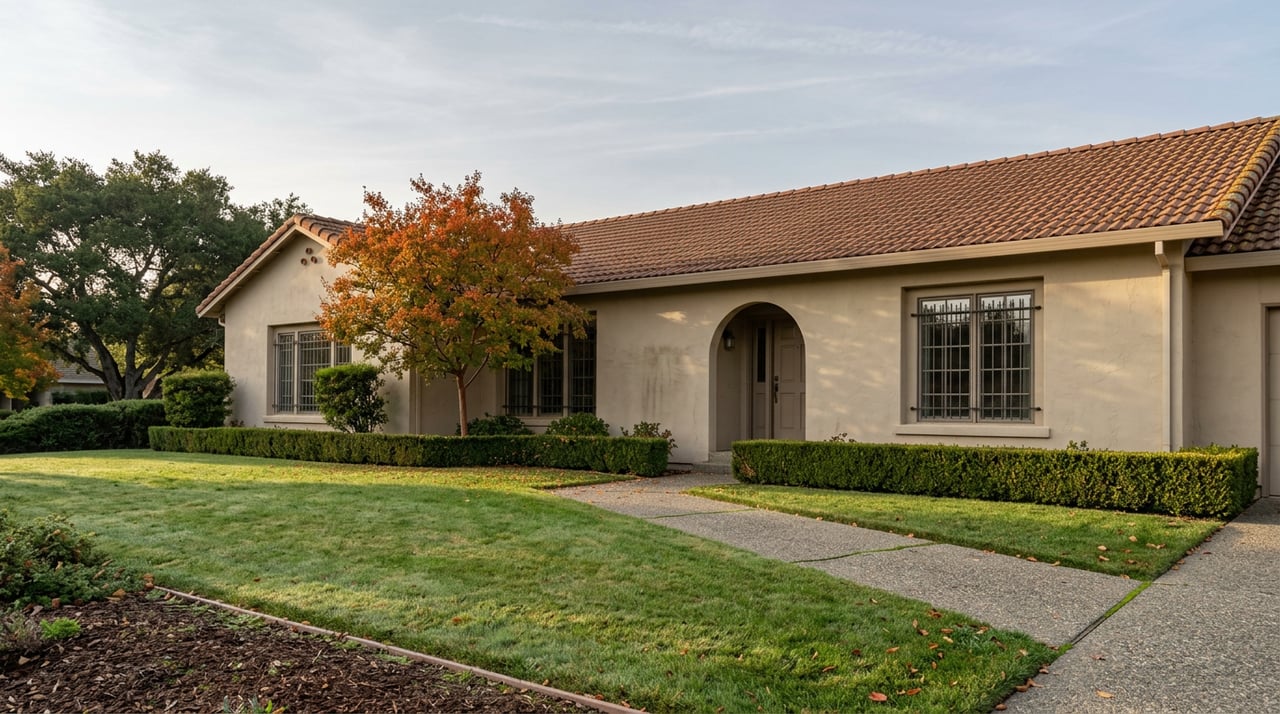
For many first-time buyers, the most recognizable Concord home style is the classic postwar single-family house. Concord’s housing base is older than many Bay Area buyers expect. The city’s 2025/30 Consolidated Plan says 79.4% of units were built before 1980, and 73.0% of owner-occupied units were built from 1950 to 1979.
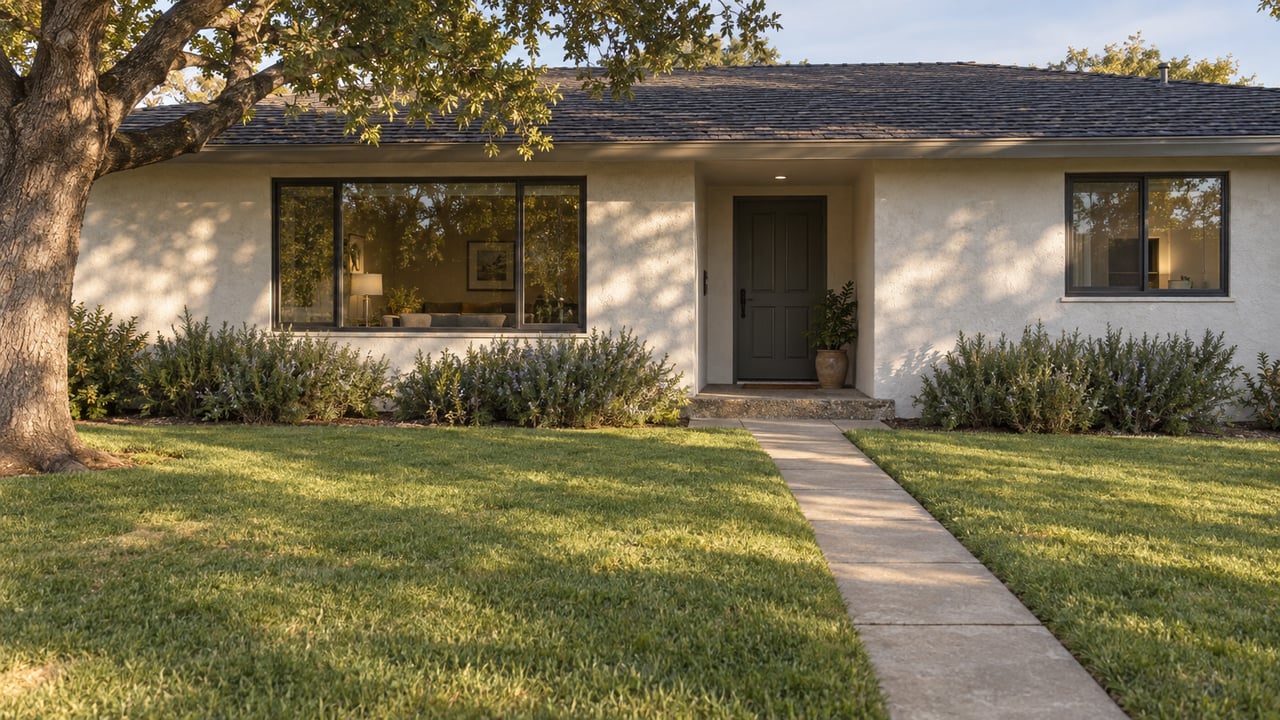
That usually means you will see ranch-era homes with modest lots, practical layouts, and established streets. These homes can offer more indoor space and yard potential than attached homes. If you want room to spread out, garden, or simply have a little separation from neighbors, this style often deserves a close look.
The tradeoff is upkeep. Because much of the stock is older, many homes may need cosmetic updates or system improvements over time. That does not make them a bad choice, but it does mean you should weigh purchase price against likely maintenance and renovation needs.
Where this style may appeal most
This kind of home often makes sense if you want:
- More private outdoor space
- A traditional single-family setup
- Flexibility to update over time
- An established residential setting
If your budget allows for repairs or gradual improvements, older Concord homes can be a practical entry point into ownership.
Mid-Century Character Homes
Concord also has a smaller pocket of homes with a more distinct design identity. Visit Concord notes that the city has about 175 Eichler homes in three neighborhoods, including Rancho del Diablo. These homes are known for open floor plans, strong natural light, and mid-century design.
For first-time buyers, this style can be exciting if you care about architecture and want something less cookie-cutter. You may find clean lines, indoor-outdoor flow, and a layout that feels ahead of its time. In a market where many homes share a similar postwar foundation, that design difference can stand out.
The same practical caution still applies. Homes from the early 1960s can come with older materials and systems, so style should be balanced with inspection details and long-term upkeep.
Townhomes And Condos
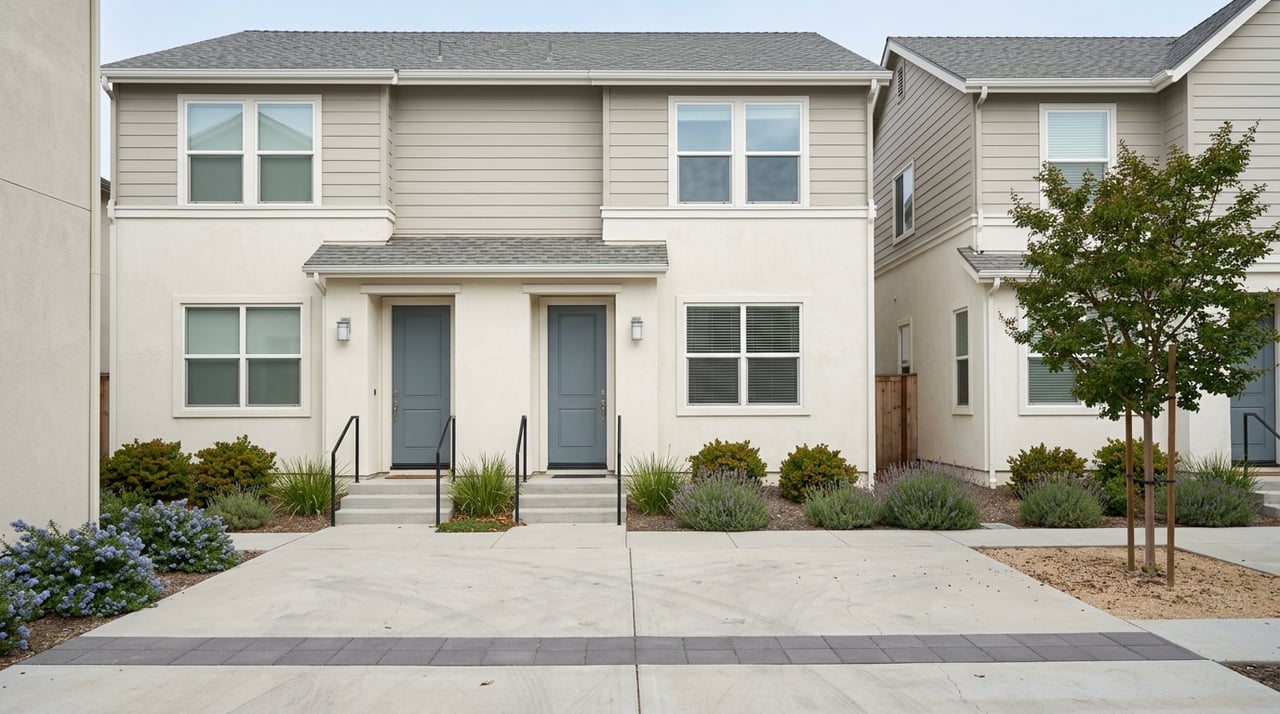
If your goal is to enter the market with a smaller footprint and less exterior maintenance, Concord’s attached housing can be a strong fit. The city reports that 15.3% of units are in 2-to-19-unit buildings. That is a meaningful part of the local housing mix.
Visit Concord’s description of Midtown as an area with apartments and townhouses helps show where this housing style tends to cluster. Rather than being spread evenly across the city, attached homes are often tied to service-rich corridors and more compact neighborhood patterns.
For first-time buyers, townhomes and condos often mean a different tradeoff than older single-family homes. You may give up yard space, but you can gain a more manageable home size and a lower-maintenance lifestyle.
Why attached homes work for many first-time buyers
You may prefer a townhome or condo if you want:
- Less exterior upkeep
- A more compact floor plan
- Easier day-to-day maintenance
- Access to locations near shopping, services, or transit
If you are comparing monthly costs, this category can be especially useful to include in your search instead of focusing only on detached homes.
Downtown And Transit-Oriented Living
Not every first-time buyer wants a classic suburban setup. Some buyers care more about walkability, a shorter trip to transit, and a home base close to restaurants and everyday activity. In Concord, Downtown is the clearest match for that lifestyle.
Downtown Concord revolves around Todos Santos Plaza, which Visit Concord connects with restaurants, local businesses, farmers markets, and free summer concerts. That gives the area a more active, central feel than a purely residential neighborhood. If you want to be close to events and amenities, this part of Concord stands out.
Transit access is another major advantage. Concord has two BART stations, Concord and North Concord/Martinez, and both serve the Antioch line and the San Francisco International Airport line. BART also confirms parking is available at both stations, which can be helpful if you want a park-and-ride routine instead of living completely car-free.
Why this style fits some buyers better
Transit-oriented and central locations may be a strong fit if you value:
- Access to BART
- A more walkable daily routine
- Proximity to Downtown activities
- A lower-maintenance housing style
If your work or lifestyle depends on regional access, station-adjacent areas can deserve extra attention.
Infill And Growth Areas
Concord is also planning for more housing in mixed-use and transit-connected areas. The Downtown Concord Specific Plan is designed to integrate housing, jobs, retail, and transportation linkages while increasing housing supply and transit ridership. The city’s 2023-2031 Housing Element also says multifamily projects can be approved by right in commercial and mixed-use zoning districts if objective design standards are met.
For first-time buyers, that matters because it signals where future housing choices may grow. These are the parts of the city where you may see more modern or more compact ownership opportunities over time. If you like the idea of buying in an area that is evolving, this is an important trend to watch.
Concord’s Community Reuse Project is especially notable. The city’s plan says housing, office, and retail are to be clustered around the BART station and along Highway 4, with townhouses and single-family homes bordering existing neighborhoods, and more than 65% of the area reserved for parks, trails, and open space. That mix suggests a long-term blend of convenience and outdoor access.
Commute Style Matters
One of the biggest mistakes first-time buyers make is focusing only on the home itself. In Concord, your experience can feel very different depending on whether you prioritize BART access, freeway access, or a quieter residential pattern.
For drivers, Concord connects to I-680, SR-4, and SR-242. Contra Costa Transportation Authority says SR-242 links I-680 to SR-4, and the Clayton Road and Concord Avenue interchanges are primary access points to Concord’s central business district with heavy weekday peak congestion. That means two homes with similar price tags can offer very different day-to-day convenience based on location.
Before you choose a neighborhood style, think through your actual weekly routine. A ranch-style home with more space may look great on paper, but a townhome near transit may better match how you live.
Parks And Outdoor Access
Concord’s outdoor access is one of its strongest lifestyle advantages. If you want more breathing room without leaving the inner East Bay orbit, this part of the city has real appeal.
Visit Concord highlights Markham Nature Park & Arboretum as less than 20 blocks from downtown. It also notes that Lime Ridge Open Space offers more than 1,200 acres and about 25 miles of trails. The Iron Horse Trail begins in Concord and continues for 27 miles, while the Contra Costa Canal Trail helps connect regional trail networks.
That means your neighborhood style decision is not only about the home type. It is also about how close you want to be to parks, trails, open space, and downtown activity.
How To Choose Your Best Fit
The simplest way to approach Concord as a first-time buyer is to think in tradeoffs. No neighborhood style is automatically best. The right fit depends on what you want most right now and what compromises feel manageable.
Here is a practical way to frame it:
- Older postwar single-family homes often offer more space and yard potential, but may come with more maintenance.
- Townhomes and condos often offer a more manageable footprint and lower upkeep, but less private outdoor space.
- Downtown and infill areas often offer stronger transit access and a more connected daily routine, but usually with a more compact housing style.
If you walk into your search knowing which of those tradeoffs matters most to you, you will make better decisions faster.
A local, neighborhood-first approach can make a big difference when you are comparing Concord’s many moving parts. If you want practical guidance on where to focus your search in Contra Costa County, connect with Kailani Kimoto for thoughtful, hands-on support.
FAQs
What kind of homes are most common for first-time buyers in Concord?
- Concord’s owner-occupied housing is largely made up of homes built from 1950 to 1979, so many first-time buyers look at older postwar single-family homes, along with townhomes and condos in more compact areas.
Is Concord more affordable than nearby East Bay cities?
- As of May 2026, Concord’s median sale price was reported at $754,548, which was lower than Walnut Creek at about $863,000 and Berkeley at about $1.4 million.
Which Concord areas are more transit-friendly for buyers?
- Downtown and other station-adjacent areas are the most transit-friendly because Concord has two BART stations, Concord and North Concord/Martinez, with service on the Antioch line and the San Francisco International Airport line.
Are condos and townhomes common in Concord?
- Yes. The city reports that 15.3% of housing units are in 2-to-19-unit buildings, and Midtown is specifically described as having apartments and townhouses.
What should first-time buyers know about older Concord homes?
- Because much of Concord’s housing stock was built before 1980, older homes may offer more space and yard potential but can also bring a higher chance of cosmetic updates or system work over time.
Does Concord offer parks and trails near residential areas?
- Yes. Concord has access to Todos Santos Plaza, Markham Nature Park & Arboretum, Lime Ridge Open Space, the Iron Horse Trail, and the Contra Costa Canal Trail, giving buyers a strong mix of city amenities and outdoor access.