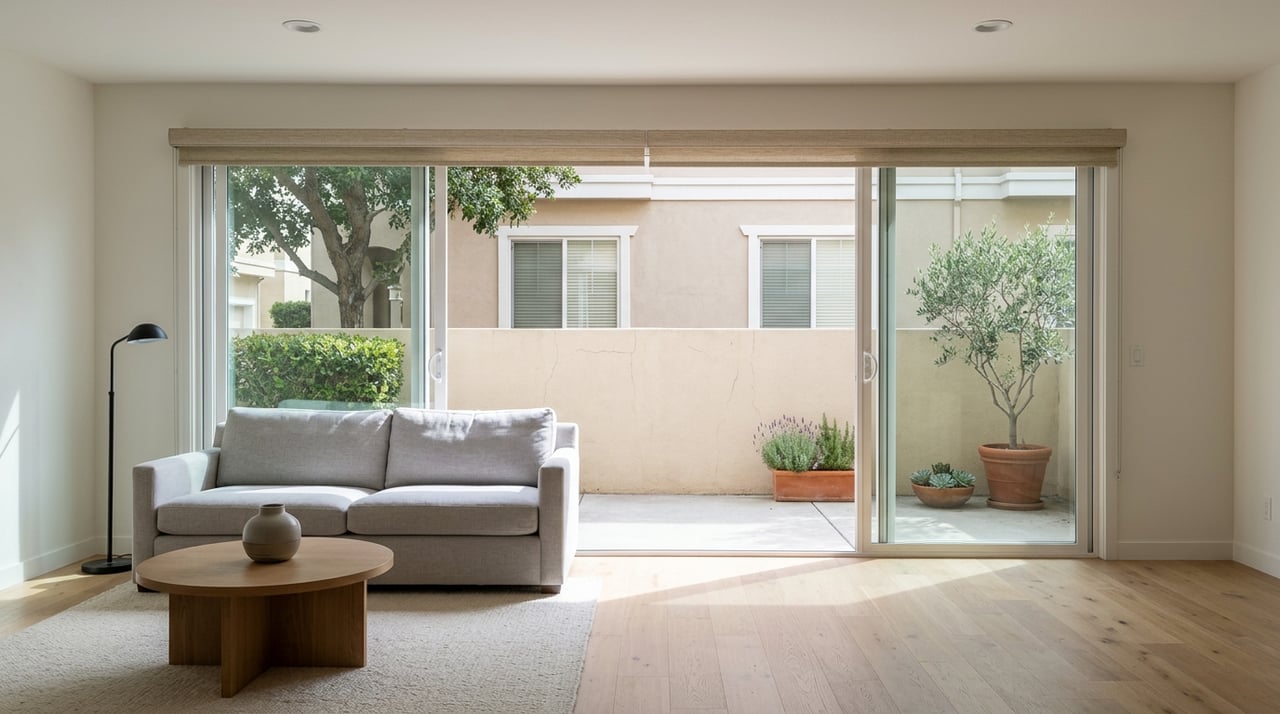
Wondering why two Rossmoor homes that look similar on paper can feel very different once you dig into the details? That is one of the most important things to understand before you buy in Rossmoor. If you are comparing homes in Walnut Creek’s 55+ community, this guide will help you sort out the main home types, how Mutuals affect costs and rules, and what to review before you write an offer. Let’s dive in.
Rossmoor Starts With Age and Governance
Rossmoor is a planned 55+ community in Walnut Creek. At least one occupant must be 55 or older, additional occupants generally must be 45 or older, and no one under 18 may live there.
Rossmoor is also governed in layers. Rossmoor Walnut Creek, often called RWC, manages communitywide amenities and services, while each of the 23 Mutuals has its own board, rules, and budget. That structure is a big reason why similar-looking homes can come with very different monthly costs and ownership details.
Rossmoor Home Types Explained
When you read a Rossmoor listing, one of the first things to confirm is the home type. In Rossmoor, buyers will mainly see co-ops, condominiums, detached homes in Mutual 61, and the special case of The Waterford.
Co-ops in Rossmoor
Rossmoor’s co-op Mutuals are First Mutual, Second Mutual, and Mutual Eight. In a co-op, the corporation owns the real property, and you receive a share certificate plus an exclusive right of occupancy rather than a typical deeded interest.
For many buyers, the appeal is that the corporation handles most exterior maintenance, grounds, and some major appliances. Rossmoor’s 2026 basic assessment schedule lists First Mutual at $1,383, Second Mutual at $1,294, and Mutual Eight at $1,387.
One detail to watch closely is taxes. Rossmoor states that property taxes are not included in the monthly assessment for co-op units. The co-op Mutuals also have added financial qualification requirements for membership, so approval standards can be different from condo purchases.
Condominiums in Rossmoor
Condominiums in Rossmoor are individually deeded homes with shared common areas. This is often the ownership style buyers expect when they hear the word condo, but the specific Mutual still matters a great deal.
Rossmoor’s ownership guide places condo price guidance at about $400,000 to $1.5 million and up. The 2026 budgeted assessment schedule shows condo Mutual basic assessments ranging roughly from $1,160 to $1,939, depending on the Mutual.
That means two condo listings with similar square footage or finishes may still have noticeably different monthly costs. The reason is simple: each Mutual sets its own budget and service mix.
Detached Homes in Mutual 61
Rossmoor’s detached-home option is Mutual 61. The current assessment schedule classifies it as a PUD with 63 homes.
This ownership type stands out because it carries more owner responsibility than many other Rossmoor options. Rossmoor’s ownership guide says Mutual 61 does not cover exterior or landscape maintenance, water, trash, or insurance.
Its 2026 basic assessment is $885, which is the lowest in the current schedule. That lower monthly figure can be appealing, but it should be weighed alongside the added responsibilities you would handle as the owner.
Single-Level Homes Are a Layout, Not a Class
Many buyers search for single-level living in Rossmoor, which makes sense for comfort and convenience. But officially, Rossmoor does not treat single-level as a separate ownership class.
Instead, single-level describes the floor plan or layout. A home can be single-level and still be a co-op, condo, or another ownership type, which means the underlying Mutual still determines fees, insurance structure, and rules.
The Waterford as a Special Case
The Waterford is Mutual 58, a 300-unit condominium HOA with its own governance and services. Rossmoor states that it is not managed by RWC Property Management and is not part of the Master Insurance Policy.
The Waterford page describes owners as maintaining full independence while receiving services such as one daily meal and weekly housekeeping. Rossmoor’s ownership guide lists Waterford monthly fees starting around $2,996.62, and the typical price range is about $200,000 to $1 million.
For some buyers, The Waterford may fit lifestyle goals better than a traditional Rossmoor condo or co-op. The key is understanding that it operates differently and should be evaluated on its own terms.
How Rossmoor Fees Work
Rossmoor still commonly refers to the monthly assessment as the “coupon.” If you are budgeting for a purchase, this is one of the first terms you should get comfortable with.
The coupon has two parts: an RWC communitywide portion and a Mutual-specific portion. Rossmoor’s ownership guide lists the RWC portion at $351.51 per month, while the Mutual portion is about $900 to $2,000 per month.
Rossmoor says the RWC portion funds amenities and services such as clubhouses, pools, the fitness center, security, transportation, cable and internet, recreation, landscaping, and counseling. The Mutual portion generally covers things like exterior maintenance, decks and patios, landscaping, street repairs, common-area utilities, reserves, and related upkeep.
The 2026 budgeted assessment schedule shows basic Mutual assessments ranging from $885 in Mutual 61 to $1,939 in Mutual 70. For co-op buyers, remember that property taxes are handled separately from the basic assessment.
Do Not Forget the Membership Transfer Fee
In addition to monthly costs, new buyers also pay a one-time Membership Transfer Fee, often called the MTF. Rossmoor’s current ownership guide says the MTF is $18,000 as of April 1, 2026.
This fee is paid once by the buyer at purchase. Rossmoor says it goes into the capital fund for infrastructure and community projects, so it is an important line item to include in your full budget.
Why the Mutual Number Matters So Much
In Rossmoor, the Mutual number is not a minor detail. It can directly affect whether a property is a good fit for your budget, lifestyle, and future plans.
Because each Mutual has its own board, rules, and budget, two homes with nearly identical floor plans may differ in monthly cost, insurance structure, rental limits, pet rules, and alteration approvals. That is why a listing should never be evaluated on appearance alone.
Rules That Can Change Your Decision
Beyond price and floor plan, buyers should pay close attention to the rules tied to the specific Mutual. These rules can shape how you use the home, what changes you can make, and what steps are required before closing.
Resale Inspections and Buyer Steps
Before a sale closes, a Mutual may require resale inspections and related buyer steps. Rossmoor’s alteration policy example says the owner must notify the Mutual when the home is listed, and the Mutual or MOD inspects the unit and adjacent common areas.
The prospective buyer must also attend a meeting about alteration policies and the permit process. Rossmoor’s landscape resale guidance states that unapproved items in common areas or patios may need to be removed or corrected before final resale approval.
Alteration Approval Rules
If a home has been remodeled, do not assume every improvement was properly approved. Rossmoor’s alteration policy says the owner must submit a scope of work to MOD, MOD reviews the application, the Board approves or denies it, and City of Walnut Creek permits are required when applicable.
Rossmoor also states that unauthorized alterations can be ordered restored to original condition. For buyers, that makes it wise to verify visible updates before relying on them as part of the value of the home.
Rental Rules Can Vary
Rossmoor’s FAQ says homes may be rented by individual owners, but the foundation does not keep a rental list, and renters pay a usage fee for amenity access. Still, Mutual-level rules can add more conditions.
For example, Mutual 53’s rules show that no leases of 30 days or less are allowed, all occupants must meet Rossmoor age limits, a copy of the lease must be provided to the Board, and no more than 25% of the Mutual’s units may be leased at one time. That example shows why investors and part-time residents should review the exact Mutual rules early.
Pet Policies May Differ
Pet rules are another area where details matter. Rossmoor’s facilities prohibit pets indoors except service animals, but Mutual-level rules can allow pets in units with limits.
Mutual 53, for example, allows usual domesticated dogs, cats, and birds subject to restrictions, and dogs must be leashed in common areas. If pet ownership is important to you, it is worth checking both the broader facility rules and the specific Mutual rules.
Membership Approval Is Part of the Process
Rossmoor has a formal membership-approval process. Its governance page says most Mutuals review applications to confirm that new residents meet the Mutual’s governing documents and state-law requirements.
The three co-op Mutuals have extra financial qualifications. Rossmoor also notes that if you are financing, lender requirements must be met, and cash buyers in the co-ops face income and liquidity tests.
How to Read a Rossmoor Listing
The fastest way to decode a Rossmoor listing is to treat it like a package of details, not just a home. You are not only buying the floor plan or the view. You are also evaluating the ownership type, the Mutual, the monthly fee structure, and any resale or alteration issues.
A practical review checklist includes:
- Confirm whether the home is a co-op, condo, PUD detached home, or Waterford unit
- Identify the exact Mutual number
- Review the monthly coupon and how it is split
- Check whether property taxes are included or handled separately
- Ask about resale inspection requirements
- Verify any past alterations and approvals
- Review rental and pet rules for that Mutual
- Budget for the one-time Membership Transfer Fee
Why Accurate Identification Matters
Rossmoor says there is no waiting list. Purchases are made from existing owners, not from a developer queue.
That makes careful review even more important. In a resale-driven market like Rossmoor, accurate Mutual identification, fee budgeting, and rule review can help you compare options clearly and avoid surprises later in escrow.
If you are buying in Rossmoor, the right fit is often about more than finding a pretty interior. It is about matching the home type and Mutual rules to how you actually want to live.
When you understand the difference between a co-op, condo, detached PUD home, or Waterford unit, and when you know how to read the Mutual details behind the listing, you can make a much more confident decision. If you want local guidance on comparing Rossmoor homes and understanding the fine print, Kailani Kimoto can help you navigate the process with clarity and care.
FAQs
What are the main Rossmoor home types in Walnut Creek?
- Rossmoor buyers will mainly see co-ops in First Mutual, Second Mutual, and Mutual Eight; deeded condominiums across many Mutuals; detached PUD homes in Mutual 61; and The Waterford, which is Mutual 58 with its own governance and services.
What does the Rossmoor monthly coupon include?
- The monthly coupon includes an RWC portion and a Mutual-specific portion. Rossmoor says the RWC part funds shared amenities and services, while the Mutual portion generally covers maintenance, reserves, and other property-related costs.
How do Rossmoor Mutual rules affect a home purchase?
- Mutual rules can affect monthly costs, insurance structure, rental limits, pet rules, alteration approvals, and resale requirements. That is why the Mutual number is one of the most important details in any Rossmoor listing.
What is different about Rossmoor co-ops?
- In a Rossmoor co-op, the corporation owns the real property and the buyer receives a share certificate plus an exclusive right of occupancy. Rossmoor also states that the co-op Mutuals have added financial qualification requirements and that property taxes are not included in the monthly assessment.
What should buyers verify before closing on a Rossmoor home?
- Buyers should verify the home type, Mutual number, monthly fees, any one-time fees, resale inspection requirements, alteration approvals, and the specific Mutual’s rules on rentals and pets before closing.