If you are thinking about moving to Moraga, you are probably trying to answer one simple question: will daily life there actually fit the way you want to live? That matters even more in a town with a distinct feel, where the pace, housing, and layout shape your routine as much as the home itself. Moraga offers a quieter, lower-density East Bay lifestyle with open space, established neighborhoods, and a car-oriented rhythm. Here’s what it’s really like to live in Moraga, and what you should know before you make a move.
Moraga at a glance
Moraga is a small East Bay town of about 16,700 residents spread across roughly 9.5 square miles. The town’s land use helps explain its character: 45.7% of its acreage is open space, while 32.6% is residential. Single-family detached parcels alone account for 27.2% of total acreage.
In practical terms, that means Moraga feels more spacious and residential than busy or urban. The town’s own mission emphasizes preserving its semi-rural character and conserving open spaces, so the overall atmosphere tends to feel calm, established, and intentionally low-density.
The setting feels peaceful and outdoorsy
One of the first things many people notice about Moraga is how much the landscape shapes daily life. Open space is not just a bonus here. It is a defining part of the town.
The local parks and recreation system points residents to town trails, EBMUD trails, East Bay Regional Parks trails, and the Lafayette/Moraga Regional Trail. Mulholland Ridge Open Space Preserve adds a 260-acre ridge-top preserve with views of the valley and Mount Diablo, plus connections into broader trail networks.
If you like the idea of weekends that involve walking, hiking, biking, or simply being outside, Moraga supports that lifestyle well. The town’s planning and open-space policies also show that preserving ridgelines and natural areas is a long-term priority, which reinforces the quieter feel many buyers are looking for.
Housing feels established and mostly single-family
Moraga’s housing stock plays a big role in how the town looks and feels. Most homes were built before the town incorporated in 1974, and more than 70% of the housing stock was built between 1960 and 1979.
That age range gives many neighborhoods an established, lived-in feel rather than a newly built master-planned look. The town also has far more single-family detached parcels than multifamily ones, with 3,996 single-family detached parcels compared with 1,490 single-family attached parcels and just 40 multifamily parcels.
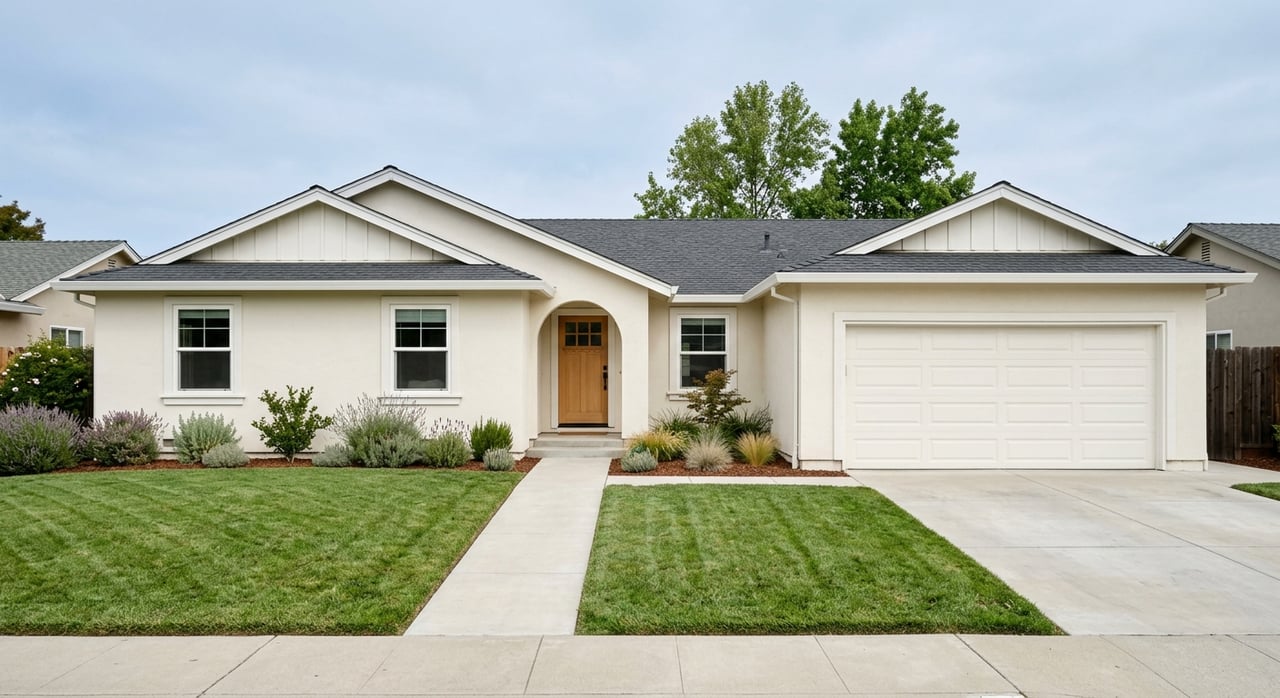
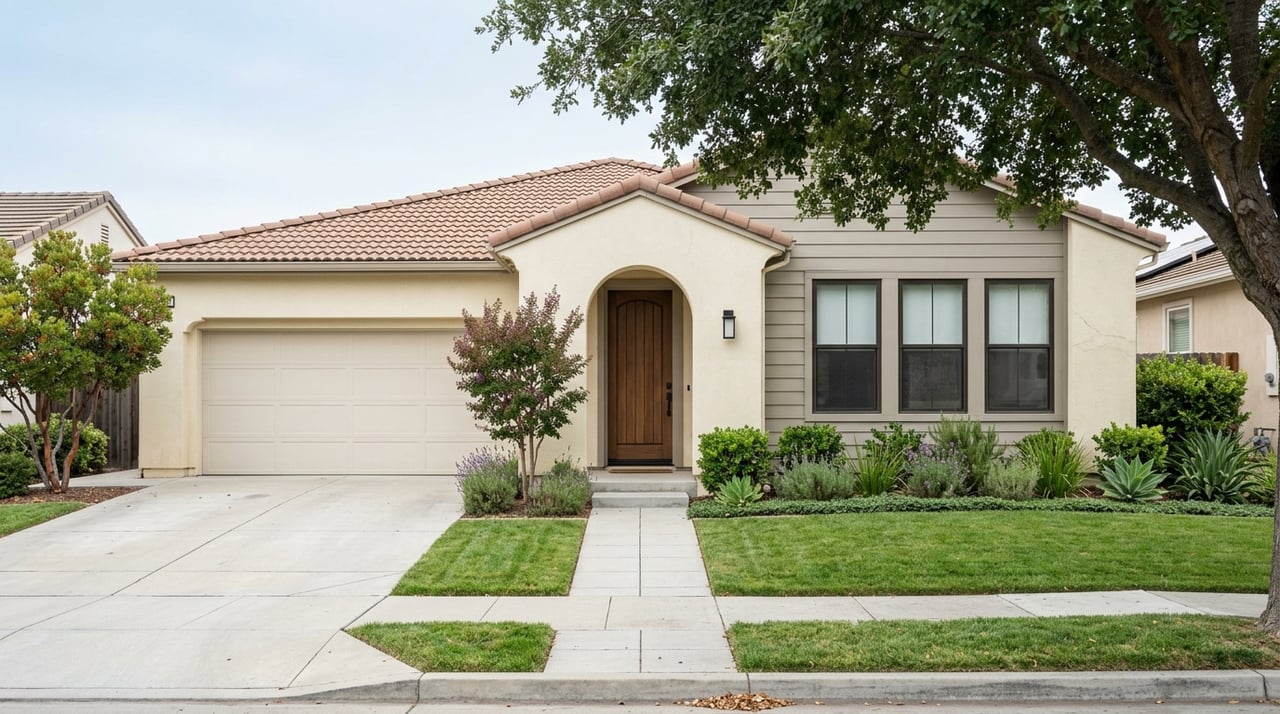
You will likely see a lot of homes that feel suburban, hillside-oriented, and low-key. Town design guidelines also encourage Spanish Colonial and Ranch style architecture, which helps create a consistent visual identity in many parts of Moraga.
Homeownership is a major part of the town
Moraga is a homeowner-heavy market. Census QuickFacts reports an 83.1% owner-occupied rate, along with a median owner-occupied home value of $1.66 million.
That does not just speak to pricing. It also suggests a town where many residents put down roots for the long term. For buyers, that can mean a more stable residential feel. For sellers, it can mean you are marketing a home in a community where neighborhood character and setting matter a great deal to prospective buyers.
Daily life usually requires a car
Moraga is not the kind of place where most people walk everywhere for errands, work, and transit connections. The town’s General Plan says low densities and limited public transit make driving the main form of transportation.
The numbers support that. Seventy-seven percent of households own two or more cars, fewer than 1% own no car, and 68% of commuters drive alone. The mean travel time to work is 30.6 minutes, which is very close to the town planning figure of 31.9 minutes.
For many residents, that means planning life around driving is simply normal. School drop-offs, grocery runs, activities, and regional commuting all tend to work best when you have a car.
Transit exists, but it is more of a connector
That said, Moraga is not completely cut off from transit options. The town highlights commute incentives through 511 Contra Costa, and County Connection Route 6 links Moraga with Lafayette BART, Saint Mary’s College, and Orinda BART.
So yes, public transportation is available. But in real life, it works more as a connector to regional rail than as the backbone of an urban-style, transit-first routine. If you are comparing Moraga with a more walkable or rail-centered community, this is an important difference.
Remote work is very workable here
If you work from home full-time or part-time, Moraga may be easier to live in than its car-oriented layout first suggests. Census QuickFacts reports that 98.6% of households have a computer and 98.4% have broadband internet.
The town’s transportation data also shows that 31.5% of employed residents work from home. That combination makes Moraga a realistic option for people who want a quieter home base without giving up digital connectivity.
For many buyers, that is part of the appeal. You can have more space, established neighborhoods, and easy access to trails while still staying connected for work.
Schools are a visible part of community life
For households thinking long term, schools are often part of the conversation when considering Moraga. The Moraga School District includes Camino Pablo Elementary, Joaquin Moraga Intermediate, Los Perales Elementary, and Donald Rheem School. The district reports 1,823 students, 127 teachers, 160 classified staff, and 4 schools.
For high school, Campolindo High School is the local public high school in the Acalanes Union High School District. Campolindo describes itself as a comprehensive four-year public high school, fully accredited by WASC, and it was recognized as a California Distinguished School in 2021.
Just as important as the school list is the role schools play in the local rhythm. District materials describe Moraga as a close-knit community, and that helps explain why many buyers experience the town as organized around long-term residential life and community routines.
The pace is quieter than many East Bay cities
Moraga is often a fit for buyers who want some separation from the busier energy of larger East Bay hubs. Because so much of the town is open space and residential land, the environment usually feels quieter and more spread out.
You are not moving here for a dense downtown, a high-rise skyline, or a packed nightlife scene. You are moving here for a more residential pace, scenic surroundings, and a town layout where preserving landscape and neighborhood character has clearly mattered over time.
Moraga can be a strong match for certain buyers
Moraga tends to appeal most to buyers who value space, stability, and a more peaceful setting. If you want an established single-family home, room to spread out, and access to outdoor recreation, the town checks a lot of boxes.
It may also work well if you are a remote worker or a household comfortable with driving as part of daily life. On the other hand, if your top priority is a highly walkable, mixed-use environment with frequent transit and a more urban feel, Moraga may not be the best fit.
What to consider before you move
Before buying in Moraga, it helps to think beyond the home itself and picture your weekly routine. Ask yourself questions like:
- Do you want a quieter, lower-density setting?
- Are you comfortable relying on a car most days?
- Would nearby trails and open space improve your lifestyle?
- Are you looking for an established residential environment rather than a newer urban-style development?
- Does a homeowner-heavy community fit your long-term plans?
The right move is not just about square footage or price. It is about whether the town’s rhythm matches the way you actually want to live.
If you are weighing Moraga against Walnut Creek, Rossmoor-area options, or other Contra Costa communities, a neighborhood-by-neighborhood comparison can make the decision much clearer. If you want help understanding how Moraga fits your goals as a buyer or seller, Kailani Kimoto can help you make a confident, well-informed move.
FAQs
What is daily life like in Moraga, CA?
- Daily life in Moraga is typically quiet, residential, and car-oriented, with a strong connection to open space, trails, and established neighborhoods.
Is Moraga, CA a walkable town?
- Moraga is not especially walk-to-everything in the urban sense, and town planning documents identify driving as the main form of transportation because of low density and limited public transit.
What kind of homes are common in Moraga, CA?
- Moraga is dominated by single-family housing, and much of its housing stock was built between 1960 and 1979, which gives many neighborhoods an established suburban feel.
Is Moraga, CA good for remote work?
- Moraga appears workable for remote employees because 98.6% of households have a computer, 98.4% have broadband internet, and 31.5% of employed residents work from home.
What outdoor activities are available in Moraga, CA?
- Moraga offers access to local trails, the Lafayette/Moraga Regional Trail, EBMUD trails, East Bay Regional Parks trails, and Mulholland Ridge Open Space Preserve.
What should buyers know about living in Moraga, CA?
- Buyers should know that Moraga offers a low-density, homeowner-heavy, semi-rural setting with strong access to open space, but daily life usually works best if you are comfortable depending on a car.