Trying to choose between Orinda and Lafayette? You are not alone. Many buyers looking in Lamorinda narrow it down to these two towns because both offer a semi-rural East Bay feel, access to BART, and highly established residential areas. The challenge is that they can feel similar at first glance. This guide will help you compare the differences that matter most, from home prices and commute patterns to downtown character and housing options, so you can decide which fit makes the most sense for your lifestyle. Let’s dive in.
Orinda vs. Lafayette at a glance
Orinda and Lafayette are both affluent Contra Costa County communities in Lamorinda, but they are not identical. Public data shows Orinda has about 19,514 residents and 7,475 housing units, while Lafayette is larger with about 25,285 residents and 9,998 housing units.
Homeownership is high in both towns, though Orinda has a higher owner-occupied rate. Census Bureau QuickFacts reports owner occupancy at 91.3% in Orinda and 77.1% in Lafayette, which supports the sense that both communities are primarily residential, with Orinda reading as even more heavily owner-occupied.
From a price standpoint, Lafayette is currently more expensive on a citywide median-sale basis. Redfin market snapshots show a median sale price of $2,265,000 in Orinda and $2,537,500 in Lafayette, with Lafayette also posting a slightly higher median sale price per square foot.
Home prices and housing feel
If budget is part of your decision, the current data gives Lafayette the edge on price. Census Reporter estimates median owner-occupied home value at $1,863,200 in Orinda and $2,000,001 in Lafayette, and current sale data continues that pattern.
That does not mean every Lafayette home costs more than every Orinda home. It means that, at the citywide level, Lafayette is pricing higher right now. For buyers comparing tradeoffs, this can make Orinda worth a close look if you want a similar Lamorinda setting with somewhat lower median pricing.
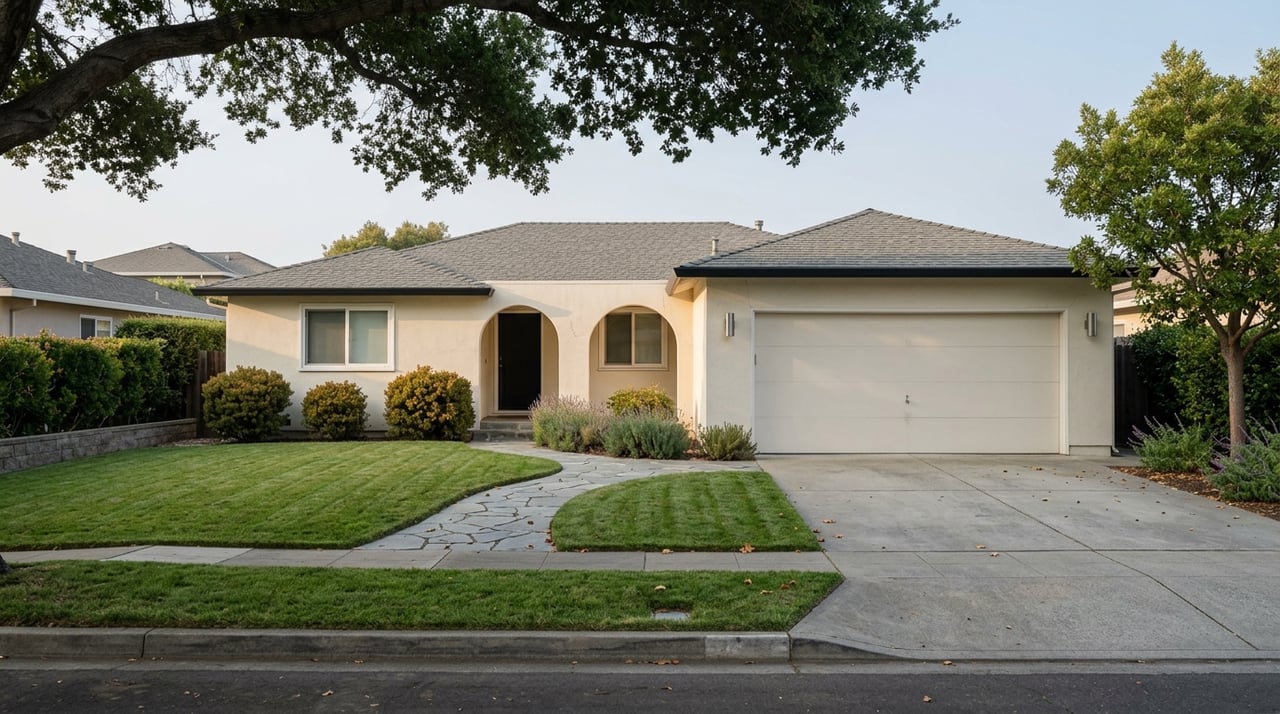
Housing style also matters. Orinda is strongly defined by low-density single-family neighborhoods, hillside homes, and compact low-rise development in downtown areas. City planning materials note that more than 60% of Orinda residences were built between 1940 and 1970, and many are custom homes on hillside lots.
Lafayette is also mostly single-family, with the city stating that single-family homes make up 82% of the housing stock. At the same time, Lafayette’s downtown planning framework more clearly accommodates multifamily and mixed-use development, which adds variety to the overall housing mix.
Downtown character feels different
One of the biggest practical differences between these towns is how the center of town feels. Orinda’s city materials describe a semi-rural community with tree-studded hillsides and low-density neighborhoods, and its downtown is split by Highway 24 into the Village District and the Theatre District.
That split shapes the experience. Orinda’s Downtown Precise Plan focuses on connecting the two sides, improving pedestrian access, and preserving the town’s sense of place. In everyday terms, Orinda often feels smaller, more compact, and more village-like.
Lafayette also describes itself as semi-rural, but its downtown appears broader and more layered. City planning materials identify four downtown commercial districts and three downtown residential neighborhoods, and the downtown framework highlights shopping, dining, transit, traffic, parking, housing, and public gathering spaces.
That makes Lafayette feel more segmented and more active in its core. If you want a busier town-center ecosystem with more pocket-to-pocket variation, Lafayette may stand out. If you prefer a smaller downtown footprint with a more uniform village-and-hillside feel, Orinda may feel more intuitive.
Neighborhood variety and overall layout
Beyond downtown, each town has a different sense of internal variety. Orinda reads as more consistent overall, with low-density single-family neighborhoods extending into the hillsides and a downtown area that stays relatively compact.
Lafayette appears to offer more named subareas and more variation from one part of town to another. City materials reference residential areas including Springhill Valley, Reliez Valley, Burton Valley, Acalanes Valley, and Bacon Way on Acalanes Ridge, which suggests a wider range of neighborhood identities within the city.
For some buyers, that variety is a plus because it creates more options in feel and setting. For others, Orinda’s more unified character is the draw because it can feel easier to understand and navigate as you begin your home search.
Commute and BART access
Both towns are commuter-friendly by Lamorinda standards because each has its own BART station on the Antioch to SFIA/Millbrae line. Orinda Station is located at 11 Camino Pablo, and Lafayette Station is at 3601 Deer Hill Road.
According to BART station information, both stations are served by County Connection and both offer daily fee parking at $3.40, reserved parking options, and capacity available at all times. That means access to regional transit is a real advantage in either location.
If you are comparing commute patterns more closely, ACS 2024 five-year data shows a mean travel time to work of 36.1 minutes in Orinda and 29.3 minutes in Lafayette. That does not predict your specific trip, but it does suggest that Lafayette households may have a somewhat shorter average commute profile overall.
If your weekday routine depends on train access and travel efficiency, this is one of the clearest data points separating the two towns. It is not the only factor, but it can be an important tiebreaker.
Schools and district footprint
For buyers who want to understand public school district structure, both towns are served by smaller, neighborhood-based systems. Orinda Union School District includes Del Rey Elementary, Glorietta Elementary, Sleepy Hollow Elementary, Wagner Ranch Elementary, and Orinda Intermediate School.
Lafayette Elementary School District includes Burton Valley Elementary, Lafayette Elementary, Happy Valley Elementary, Springhill Elementary, and Stanley Middle School. Both towns are also within the Acalanes Union High School District, which includes Acalanes High, Campolindo High, Las Lomas High, Miramonte High, Acalanes Center for Independent Study, and Adult Education.
California Department of Education district profiles for 2025 to 2026 show enrollment of 2,706 in Orinda Union and 3,234 in Lafayette Elementary. For buyers, the practical takeaway is that both towns have relatively small district footprints compared with larger suburban systems.
Which town may fit your lifestyle?
If you are looking for a smaller-feeling town with a classic Lamorinda village character, Orinda may be the better fit. The public data and city descriptions point to a more uniformly low-density environment, hillside homes, and a compact downtown structure.
If you want more neighborhood variation, a more active downtown core, and somewhat shorter average commute patterns, Lafayette may be the stronger match. It is the larger town, and its planning framework points to a more layered center with a broader mix of commercial and residential pockets.
A simple way to think about it is this:
- Choose Orinda if you want a smaller, more consistent village-and-hillside feel.
- Choose Lafayette if you want a larger town with more variation and a busier downtown environment.
- Compare both closely if BART access, home style, and overall price point are your biggest decision factors.
Side-by-side comparison
| Category | Orinda | Lafayette |
|---|---|---|
| Population | 19,514 | 25,285 |
| Housing units | 7,475 | 9,998 |
| Owner-occupied rate | 91.3% | 77.1% |
| Median owner-occupied value | $1,863,200 | $2,000,001 |
| Median sale price | $2,265,000 | $2,537,500 |
| Median price per sq. ft. | $888 | $902 |
| Mean travel time to work | 36.1 minutes | 29.3 minutes |
| BART station | Yes | Yes |
| Overall feel | Smaller, more uniform | Larger, more varied |
| Downtown pattern | Village and Theatre District | Multiple downtown districts |
How to make the final call
When two towns are this close in appeal, the best decision usually comes down to daily life. Think about where you want to spend time, how much neighborhood variety you want, whether a busier downtown matters to you, and how far your budget stretches in each market.
It also helps to compare homes in person with the broader context in mind. A house that looks similar on paper can feel very different depending on lot setting, proximity to downtown, BART convenience, and the surrounding street pattern.
If you are weighing Orinda against Lafayette, a local comparison strategy can save you time and help you focus on the areas that truly fit. Working through the tradeoffs with someone who knows Contra Costa neighborhoods can make the decision feel much clearer.
If you are ready to compare Lamorinda options with a local, practical approach, Kailani Kimoto can help you evaluate neighborhoods, pricing, and next steps with confidence.
FAQs
What is the main difference between Orinda and Lafayette?
- Orinda generally feels smaller, more compact, and more uniform, while Lafayette is larger, has more neighborhood variation, and a busier downtown core.
Is Lafayette more expensive than Orinda?
- Based on the research report, yes. Current median sale price data shows Lafayette at $2,537,500 and Orinda at $2,265,000.
Do Orinda and Lafayette both have BART stations?
- Yes. Both towns have their own BART stations on the Antioch to SFIA/Millbrae line, and both offer parking and County Connection service.
Which Lamorinda town has a shorter average commute?
- ACS 2024 five-year data shows a mean travel time to work of 29.3 minutes in Lafayette and 36.1 minutes in Orinda, suggesting a shorter average commute profile in Lafayette.
Are Orinda and Lafayette mostly single-family home markets?
- Yes. Both are primarily single-family markets, though Lafayette’s planning framework includes more support for multifamily and mixed-use development in downtown areas.
How do Orinda and Lafayette compare for school district structure?
- Both towns are served by smaller, neighborhood-based elementary and middle school districts, and both are within the Acalanes Union High School District.